Registered breeder with Australia’s Largest Ethical Breeding Community Responsible Pet Breeders Australia
RPBA Member number: ✅ 16559
Northern Territory
Members that care about the well-being and future home of their animals. They are responsible and follow ethical practices.
Vet Approved Breeders:
After becoming an RPBA probationary breeder, members can then apply for a full RPBA membership, where they are checked and audited by Veterinarian. New members that have already been recently Vet audited need to provide proof of audit and will be crosschecked with Vet. Once they pass these requirements and the below they are approved.
Best In Class Dog Welfare & Care:
Full members must have a solid understanding of best practices, breeding code of ethics and how to care and bring up their animals. Animals must be fed premium diets for their welfare and future health.
By being a registered breeder we agree to the RPBA Responsible Breeder Code of Ethics
Verify RPBA membership: here
“Inspiring the best lifetime care for all pets from the moment they are born“
Caring for your new puppy
We care that our babies live long, healthy, happy lives and reserve all rights when choosing new pawrents; we do not operate under a first in best dressed model but a most compatible partnership model, hence the more information about your family you can supply to us, the better match making we can do.
We absolutely encourage:
- Early puppy socialisation
- Full schedule of vaccinations
- Awareness, avoidance and protection from preventable disease such as parvo
- Desexing after 6 months of age; our animals are sold as ‘pets only’
- Grooming/clipping your pet every 6 – 8 weeks
- Ongoing obedience training of your dog
- Regular worming and parasite control
We believe it is an owners choice to
- Utilise kennels and/or crating and crate training
- Keeping your dog inside/outside
- Feed or not feed a raw diet/kibble/canned; however, we do recommend a mix of high quality kibble and raw/bones
- Let your dog sleep on your bed
- Let your dog sit at the table and eat dinner with you
- Use products such as Nexguard, Bravecto etc
Emotional Support
Our Oodles… making their way to emotional support and therapy dogs
From helpguide.org
Studies have shown that:
- Pet owners are less likely to suffer from depression than those without pets.
- People with pets have lower blood pressure in stressful situations than those without pets. One study even found that when people with borderline hypertension adopted dogs from a shelter, their blood pressure declined significantly within five months.
- Playing with a dog, cat, or other pet can elevate levels of serotonin and dopamine, which calm and relax.
- Pet owners have lower triglyceride and cholesterol levels (indicators of heart disease) than those without pets.
- Heart attack patients with pets survive longer than those without.
- Pet owners over age 65 make 30 percent fewer visits to their doctors than those without pets.
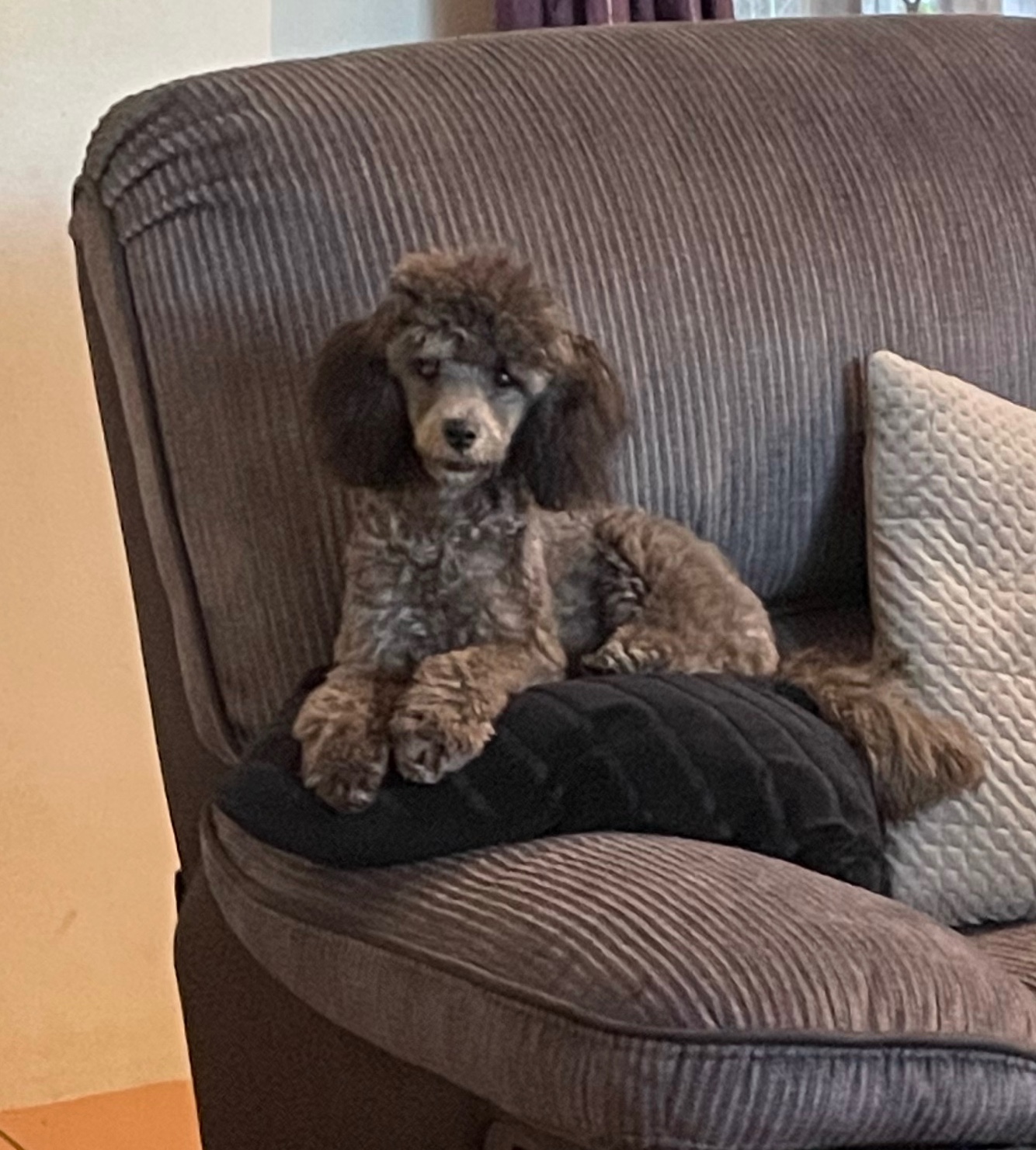
Some of our past babies have gone on to lead successful careers as Emotional Support Pets and others are currently in training. Their amazing temperaments are testament to this.
Read: https://www.helpguide.org/articles/mental-health/raising-emotionally-intelligent-children.htm
Unlike parents or teachers, pets are never critical and don’t give orders. They are always loving and their mere presence at home can help provide a sense of security in children.
Having an ever-present pet can help ease separation anxiety in children when mom and dad aren’t around.
Having the love and companionship of a pet can make a child feel important and help them develop a positive self-image.
Kids who are emotionally attached to their pets are better able to build relationships with other people.
Studies have also shown that pets can help calm hyperactive or overly aggressive kids. Of course, both the animal and the child need to be trained to behave appropriately with each other.
A pet can help develop a young and expanding mind by teaching a child empathy and understanding. Kids can talk with their pet without a fear of rejection, which enables them to build their confidence, and even their vocabulary.
Getting even a small, caged pet, such as a guinea pig or hamster, is a great way to teach a child responsibility
Caring for your Oodles coat
Your new poodle or oodle will absolutely need to be regularly groomed, there are many business’s who offer this service. A regular groom will set you back between $50 – $120 every 6-8 weeks. Additional to this it is recommended you brush your Oodles coat daily; this will help immensely with desensitising to the grooming process.
The Poodle coat consists of wiry outer hair and a dense, cottony undercoat. The two layers can become quickly matted, especially when coming in contact with sticky substances like food or mud.
Hair always grows back so don’t be scared to bond with your Oodle over some clipping practise. YouTube is a goldmine of DYI teach yourself how to clip tutorials like this one
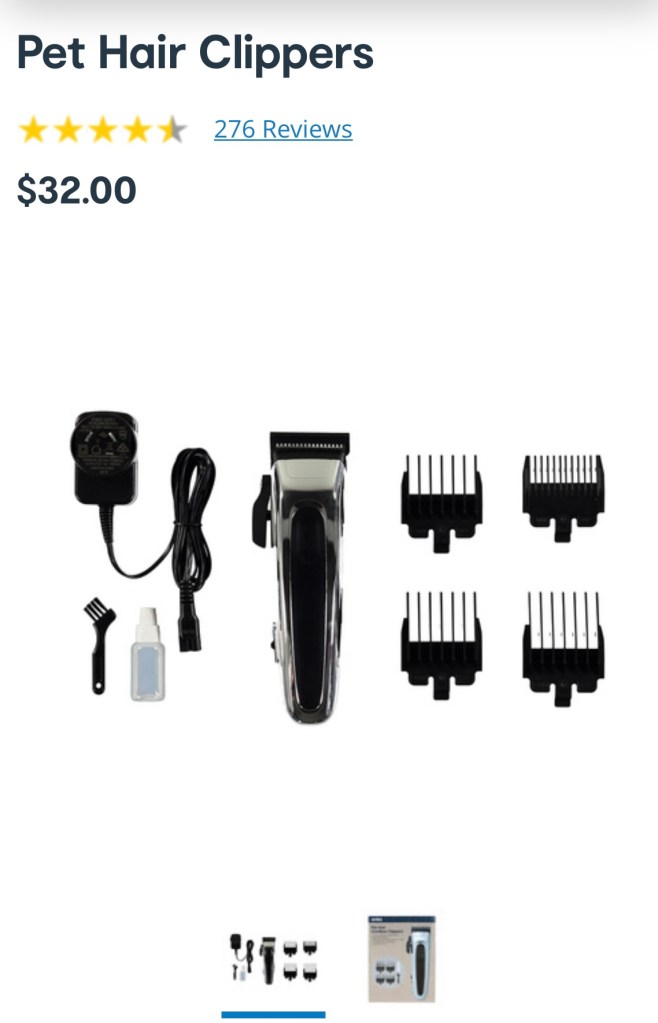
And you cannot go wrong with this little bargain from Kmart for the occasional tidy up at home
 Beaux Chiots Darwin